
In today’s digital economy, businesses don’t just compete on products—they compete on speed, scalability, and adaptability.
A sudden spike in users.
A viral product launch.
A seasonal surge like Black Friday
The question is no longer “Will your system handle it?”
It is:
“Can your system scale instantly without breaking?”
This is where cloud computing introduces one of its most powerful capabilities: Rapid Elasticity.
And for professionals targeting cloud computing jobs in the USA, this is not just a concept—it’s a career-defining skill.
What is Rapid Elasticity?
Rapid elasticity is the ability of a cloud system to automatically scale computing resources up or down in real-time, based on demand.
Unlike traditional infrastructure, where scaling requires:
• Hardware procurement
• Manual configuration
• Significant downtime
Cloud platforms like AWS (Amazon Web Services) allow systems to dynamically adjust resources within seconds.
In simple terms:
Resources appear when you need them—and disappear when you don’t.
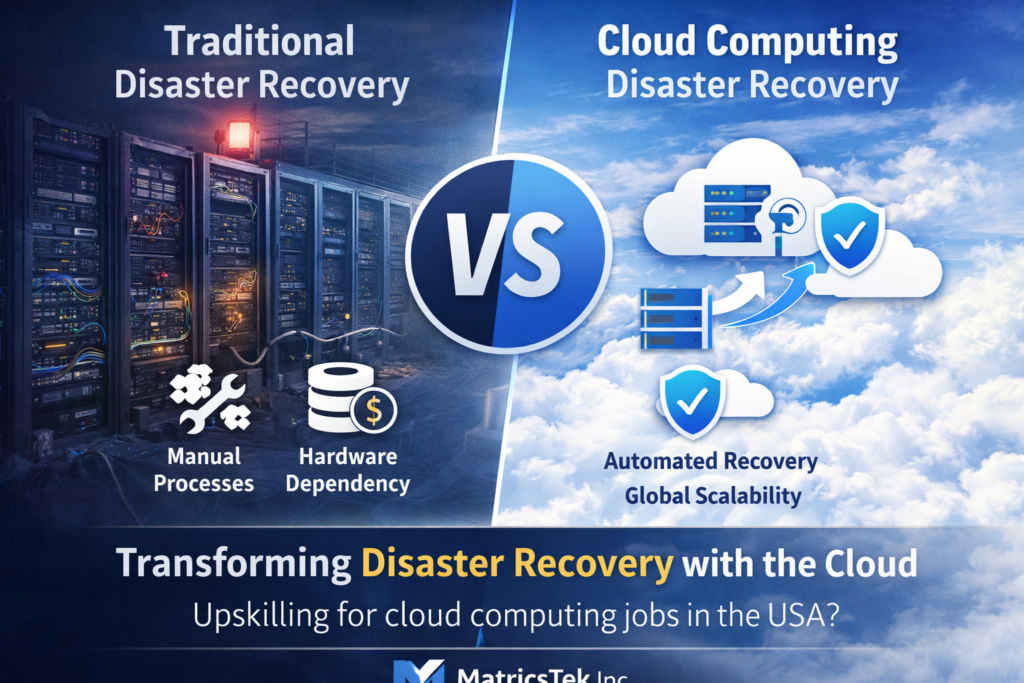
Traditional Infrastructure vs Cloud Elasticity
Let’s understand the contrast:
Traditional IT Approach:
• Capacity planning based on assumptions
• High upfront investment (CapEx)
• Over-provisioning to handle peak loads
• Idle resources during normal operations
• Slow and manual scaling
Cloud Computing Approach:
• Real-time scaling based on demand
• Pay-as-you-go (OpEx model)
• No idle infrastructure
• Automated provisioning
• High responsiveness
The shift is from static systems to adaptive systems.
Key Benefits of Rapid Elasticity for Businesses
1. Eliminating Capacity Guesswork
In traditional setups, businesses must predict future demand and invest accordingly.
This often leads to:
• Overestimating ? Wasted resources
• Underestimating ? System failures
With rapid elasticity:
• Systems scale dynamically
• No need for long-term capacity assumptions
Businesses can stop guessing and start responding in real-time.
2. Cost Efficiency with Pay-as-You-Go
Rapid elasticity works closely with the cloud’s measured service model.
Instead of:
• Investing heavily in infrastructure that may remain unused
Organizations:
• Pay only for the resources they actually consume
This makes cloud computing financially efficient, especially for startups and scaling enterprises.
3. Increased Speed and Agility
Traditional scaling is slow because it depends on physical infrastructure.
Cloud environments:
• Scale automatically within seconds
• Respond instantly to demand spikes
• Enable faster product rollouts
Speed is no longer a luxury—it’s a business necessity.
4. Optimized Resource Utilization
On-premise systems are often inefficient because resources remain underutilized.
With rapid elasticity:
• Resources are allocated precisely when needed
• Released immediately after use
This ensures maximum efficiency with minimal waste.
5. Supporting Global Scalability
Cloud platforms like AWS allow businesses to scale across:
• Multiple regions
• Multiple availability zones
This ensures:
• Consistent performance worldwide
• Seamless user experience across geographies
A critical capability for companies operating in global markets like the USA.
Why Rapid Elasticity Matters for Job Seekers in the USA
The demand for cloud professionals is growing rapidly across industries.
Roles such as:
• Cloud Engineer
• DevOps Engineer
• Data Engineer
• Site Reliability Engineer (SRE)
• Data Scientist ..are increasingly expected to have strong cloud computing expertise.
What Employers Are Really Looking For:
- If you’re targeting cloud computing jobs in the USA, employers expect more than just tool familiarity.
- They want professionals who can:
- Design systems that scale automatically
- Optimize cost using elastic infrastructure
- Handle traffic spikes without downtime
- Build resilient, high-performance architectures
- Leverage AWS services for dynamic scaling
The Role of Rapid Elasticity in Data Science
A crucial but often overlooked insight:
Modern data science training must include cloud concepts.
Why?
• Data pipelines often face fluctuating workloads
• Machine learning models require scalable compute power
• Real-time analytics demands dynamic resource allocation
Cloud services like:
• AWS EC2 (compute scaling)
• AWS S3 (scalable storage)
• AWS Lambda (serverless execution)
• AWS Auto Scaling (dynamic resource management) are integral to modern data science workflows.
Without understanding rapid elasticity, a data professional’s skillset remains incomplete.
From Learning Tools to Designing Systems
At MatricsTek Inc., we emphasize a critical mindset shift:
Learning isolated tools
Designing scalable, adaptive systems
Because in real-world scenarios:
• Demand is unpredictable
• Failures are inevitable
• Performance expectations are high
The real skill lies in how systems behave under changing conditions.
How to Build Expertise in Rapid Elasticity
If you want to stay relevant in today’s job market:
Focus Areas:
• AWS Auto Scaling and Elastic Load Balancing
• Serverless architectures (AWS Lambda)
• Infrastructure as Code (Terraform, CloudFormation)
• Monitoring and scaling policies
• Cost optimization strategies
Practical Learning Approach:
• Build projects that simulate traffic spikes
• Implement auto-scaling groups
• Analyze system performance under load
• Optimize resource allocation
Hands-on experience is what differentiates candidates in interviews.
Final Thoughts
Rapid elasticity is not just a feature of cloud computing—
it’s a fundamental shift in how systems are designed and operated.
For businesses, it means:
Flexibility
Cost efficiency
Speed
For professionals, it means:
Relevance in a cloud-first job market
The real question is no longer:
“Can your system handle growth?”
But
“Can your system scale intelligently, instantly, and efficiently?”
At MatricsTek Inc., we help aspiring professionals bridge the gap between learning and real-world expectations, ensuring they are prepared for high-demand cloud computing jobs in the USA.
Are you still thinking in fixed capacity… or building systems that scale with demand?
#cloud #computing #rapid #elasticity #AWS #cloud #computing #jobs #in #USA #data #science #training #cloud #architecture #auto #scaling #DevOps #SRE #scalable #systems #digital transformation